Law & Practice
JAPAN: IP High Court Confirms Refusal of 3D Mark for Baby Fork Shape
Published: September 2, 2026

Tomohiro Kuribayashi TMI Associates Tokyo, Japan
Verifier
Fumie Enari Takino Kawasaki & Associates Tokyo, Japan
The Intellectual Property High Court (Second Division) has upheld the refusal by the Japan Patent Office (JPO) to register a three-dimensional trademark filed by KJC Communications (KJC) for the shape of an infant and children’s table fork. The judgment is dated June 10, 2026.
KJC applied on June 27, 2022, for registration of the trademark in Class 8, but the application was rejected and KJC’s appeal was dismissed by the JPO on October 16, 2025 (Appeal No. 2023-10435), prompting the present suit. The mark (pictured below) consisted of a thick handle with a constricted “waist,” combined with a four-pronged head featuring U-shaped grooves.
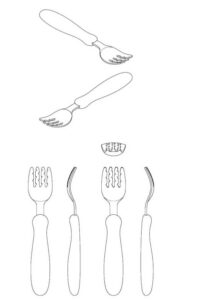
The case turned on: (1) whether the shape was a nondistinctive product shape under Article 3(1)(iii) of the Trademark Act; and (2) whether it had acquired distinctiveness through use under Article 3(2).
The court found that the shape fell within the range of what consumers would perceive as chosen for function—easier gripping and preventing noodles from slipping—and that similar shapes were widely traded by third parties, so Article 3(1)(iii) applied.
On Article 3(2), it held that concrete sales volume and market share were not objectively established, advertising was limited, and the goods were always sold bearing the EDISON/EDISONMAMA word marks. A consumer survey showed only 20.1 percent of respondents associated the shape with KJC’s EDISONMAMA brand, which the court found insufficient. The claim was dismissed.
The decision illustrates the standard applied to product-shape marks in Japan. Product shapes are generally treated as inherently nondistinctive and, reflecting the public interest against granting one party a monopoly over functional shapes, such applications are commonly refused under Article 3(1)(iii), making acquired distinctiveness under Article 3(2) the decisive question.
In assessing Article 3(2), the court placed weight on objective data such as sales volume and market share, which it found had not been objectively established here. The court also considered the survey evidence but regarded the 20.1 percent recognition figure as insufficient, consistent with existing precedent. The outcome turned on the absence of objective sales and market-share evidence and on a survey result that the court found did not establish recognition of the shape as a source indicator.
Although every effort has been made to verify the accuracy of this article, readers are urged to check independently on matters of specific concern or interest. Law & Practice updates are published without comment from INTA, except where it has taken an official position.
© 2026 International Trademark Association