Interviews
Phoenix Rising: In Conversation with the Leadership Meeting Co-Chairs
Published: September 16, 2026
The 2026 Leadership Meeting comes to registrant-favorite Phoenix, Arizona, USA, from November 17 to 20. The invitation-only event convenes INTA leadership and volunteers to advance the Association’s mission and strategic objectives and to engage an advanced educational program designed around practical learning, professional connection, and leadership.
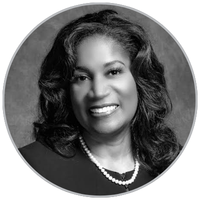
Deirdre Clarke, Novartis Pharmaceuticals (USA)
The INTA Bulletin spoke recently with Leadership Meeting Co-Chairs Deirdre Clarke, IP Counsel at Novartis Pharmaceuticals (USA), and Jennifer A. Van Kirk, Partner at Womble, Bond, Dickinson (USA), about the thinking behind the program and why Phoenix is a perfect backdrop to forge new connections, exchange insights, and confront pressing challenges.
The co-chairs discuss a program that explores developments reshaping legal practice, including artificial intelligence (AI), while also extending beyond traditional trademark topics to consider patents, trade secrets, M&A, the economics of intellectual property (IP), and sector-specific issues.

Jennifer A. Van Kirk, Womble, Bond, Dickinson (USA)
The co-chairs also highlight well-being as a leadership concern, reflecting the need for organizations to support people as whole individuals while attracting and retaining talent.
Furthermore, Phoenix provides more than a backdrop. Arizona-based organizations, local industries, wellness traditions, sports, food, and the desert landscape are integrated into the Meeting, giving registrants ways to engage with the host city while building professional relationships through shared experiences.
Above all, they want registrants to leave with useful ideas, renewed connections, and the feeling of being, as Ms. Clarke puts it, “happily exhausted.”
What was your overarching vision for this year’s program?
Deirdre Clarke (DC): It’s probably going to sound corny, but it was: let’s make this the best Leadership Meeting ever. First, having these great takeaways that you can actually use in your practice. When I think about my very first INTA event, it was at TMAP [INTA’s Trademark Administrators & Practitioners Meeting], where I was in-house at the time at another pharmaceutical company as a paralegal. I remember a session where there were two attorneys who gave a presentation on the art of saying “no.” They were so dynamic, and their presentation was so great. But what was even more fantastic is that the learnings from that presentation have carried through my practice, and from my shift from paralegal to attorney, and I use those tools. Obviously, time has evolved, things have evolved, but the salient, basic points that I learned at that INTA event have stayed with me. So, when I think of this Leadership Meeting, I’m hoping that people will find a pearl of wisdom that they can take back with them and use in their practice.
Another thing is just the ability to catch up and meet with your friends and colleagues. And for me, it’s like camp for IP geeks. It’s great catching up with colleagues you work with who have, over the years, become your friends. And then it’s also meeting friends of friends who become your friends.
Lastly, there are networking opportunities and educational content. It’s always helpful to have sessions that touch upon things you’re experiencing currently, and also some things that are forward-looking, giving practitioners at different stages of their practice an opportunity to meaningfully learn something. Those are the touchpoints that resonated with me in thinking about this particular Leadership Meeting.
I’m hoping that people will find a pearl of wisdom that they can take back with them and use in their practice. – Deirdre Clarke
Jennifer A. Van Kirk (JVK): In terms of the content, we’re both passionate about making sure the content is tailored to the registrants of this Meeting. The last thing somebody wants to do is sit in a session that’s just telling them something they already know. We want to make sure that the content is sophisticated and high-level and brings something new. The registrants at the Leadership Meeting are typically senior in their positions. They’re leaders in their organizations, and the content has been curated to reflect that.
As Phoenix is my home, the second overarching vision that I had was really to highlight the Phoenix area. There’s so much natural beauty here. It is a sports mecca. Also, a lot of people come here for wellness. The wellness resort Canyon Ranch, one of the brands we’re highlighting, helped found the wellness movement more than 50 years ago in Tucson, just an hour and a half away from Phoenix, and will participate in the session The Well-Being Imperative in the Legal Profession: Leadership Strategies That Work (November 20, 12:00 pm–1:00 pm).
But also I wanted to highlight that Phoenix, for all of its natural beauty and the things that bring people here on vacation, is home to many sophisticated businesses and has a well-established business community, which I don’t want people to overlook.
The registrants at the Leadership Meeting are typically senior in their positions. They’re leaders in their organizations, and the content has been curated to reflect that. – Jennifer A. Van Kirk
AI is woven throughout the program, including the new interactive AI Lab, sessions on AI clauses and contracts, and professional judgment in an AI-centered world. What do you hope registrants will gain from the program’s treatment of AI-related issues?
JVK: With AI, I think the initial shock has somewhat dissipated for many people, and we’re now at the acceptance stage. I know our firm is being quite determined and making sure every single person on our team is integrating AI into their workflow. So, what I would hope people take away in terms of AI is the pearl of wisdom that Deirdre mentioned earlier: coming out of this Meeting, having gained one, two, maybe five new ways to really incorporate AI effectively into your practice.
DC: I think there’s a distinct recognition by INTA that AI is here to stay. We can’t get rid of it, so how do we guide people and help them to, as Jennifer has said, accept what has happened, but also become more comfortable with it?
The workshop session, AI Lab, Practical Prompting, Workflows, and Better Outputs (November 17, 10:00 am–11:30 am), is a practical way in which participants can engage. Some people learn quite differently, so maybe a presentation will work for one, but then maybe going to the AI Lab and participating in an interactive, hands-on learning workshop—like learning how to configure prompts—will be more beneficial to them.
Could you say a little more about the AI Lab?
DC: It’s really meant to set people up to dive in. Perhaps a lot of our participants have not really dived into AI, except for maybe an occasional date with Copilot to spruce up an email. The AI Lab is geared toward getting people to sink their teeth into AI, see how they can use it, and understand how it could help them in their daily work. The Lab is a practical way for them to do that. Whereas in a presentation you’re having someone talk to you, this session is more: here’s the task and see what comes out on the other side. Participants can ask questions and figure out how to apply these tools in their own practice.
The AI Lab is geared toward getting people to sink their teeth into AI, see how they can use it, and understand how it could help them in their daily work. – Deirdre Clarke
The program also includes sessions that go beyond traditional trademark practice, covering areas such as M&A, patents, trade secrets, IP in the golfing industry, and the economics of IP. Why was it important to broaden the conversation in this way for Leadership Meeting registrants?
DC: I think it’s recognizing that we don’t operate in a vacuum. So, this is a let’s take a whole-of-practice look, whether you’re in-house or you’re in private practice, to see what are the other topics in the IP space that are adjacent to what it is that you do, but sometimes you need to interact with those other groups.
It’s good for us as trademark practitioners to understand, let’s say, in my case, what my counterparts are doing, and how we can take a whole-of-IP approach to litigation, for example. They come with their patent background; I come with my trademark/copyright background. Look at how we might tackle something together.
So, I think it’s good for us to have the ability to be conversant in other languages across the IP spectrum, come together, and be able to collaborate on different topics.
JVK: From the focus of outside counsel, as a trademark lawyer, you want your clients to view you as a trusted advisor, and to do that, I think you need to be able, as Deirdre said, to speak many languages, and be able to issue-spot outside of trademark law. You’re certainly not going to be an expert in all things, nor should you try to be, but you do need to be able to see issues and see around corners for clients. Not just in trademarks, but in some of these other areas of practice that we’re going to be highlighting in the educational content as well.
The program includes a focus on well-being in the legal profession. Why does this topic belong in a leadership-focused IP program, and what do you hope leaders will take back to their teams and organizations?
JVK: As senior practitioners and leaders in our organizations, I think we need to be focused on the well-being of our teams and be cognizant of the need for life outside of trademark law, and aware of the fact that we are very complex beings. We have a lot of different needs, and we need to make sure that those needs are met. And I think that’s really the basis of wellness—looking at people as whole individuals so that we can bring the most to each of our different components by making sure that our basic needs are met. In terms of the wellness programming, first, I think it’s about raising awareness that this is an important issue. Some in our profession simply don’t focus on wellness. And then, second, I do again hope there are some pearls of wisdom that people can find within our content to bring back to their organizations, in terms of ways to integrate wellness into their organizations.
DC: I think it’s also—and I keep coming back to the same phrase—a recognition. I think it’s INTA recognizing that law practice is evolving as the people who are coming into the practice are evolving. When I started, X number of years ago, it was a very different environment. It was “nose to the grindstone, don’t come up for air.” And I say that laughingly, but that was the way it was. And now when you have younger people coming into the practice, they have a different mindset—work-life balance is important, stress at the office is not accepted to the same degree. There is an emphasis on trying to make the legal profession maybe a little softer, gentler, kinder, while still wanting the substance there. But I think it’s also one of those things that could be used to attract and retain talent.
People know that there is a certain need to, as Jennifer said, recognize that people come to work as a whole person, and they’re not hiding elements of themselves to be in the office.
Which session or topic are each of you personally most looking forward to, and why?
DC: I’m really interested in the China update: China’s 2027 Trademark Reset: Brand Strategy, Market Access, and Risk Governance for Global Leaders (November 20, 2:30 pm–3:30 pm). China has been one of those practice areas that has been developing gradually, with improvements aimed at providing better protection for those who want to do business in China. It would be very interesting for me to learn about those improvements and the proposed legislation, and how I can take those learnings back to my team. So that’s the one I’m most interested in.
JVK: I am very interested in the golf industry session (The Business of Sport: IP’s Big Swing in the Golf Industry, November 20, 10 am–11 am). I think, in part, because one of the things I find so interesting about what we do, and about IP in general, is how seemingly ordinary things can have so many different levels of complexity. So a golf ball or golf club seems relatively simple, but when you really get into it, there are so many different aspects of IP involved, and so many different tools that brands can use to try to protect that IP. So I think it will be particularly interesting to hear what they have to say about it.
As senior practitioners and leaders in our organizations, I think we need to be focused on the well-being of our teams and be cognizant of the need for life outside of trademark law. – Jennifer A.Van Kirk
The Business Development excursions give registrants opportunities to connect outside the formal meeting rooms, including experiences tied to Arizona culture, food, golf, wellness, and the desert landscape. How should registrants think about using these activities to build meaningful, long-term professional connections?
JVK: This is a relationship business. And relationships are built through shared experience and spending time with one another, so the Business Development excursions really allow people to do that, to spend some time together, getting to know each other, in a setting that isn’t completely work-focused. And, of course, in Arizona, we have so many things to offer, and so many varied experiences, in terms of cultural, outdoor recreation, food and drinks, so I think there’s so much for people to explore here.
Deirdre, as someone coming to Arizona from elsewhere, what aspects of the Business Development program are you most looking forward to, and how do you think registrants should approach those opportunities?
DC: I think it’s an excellent opportunity for people who are coming from other areas to get a sense of what that city, in this particular instance, Phoenix, has to offer. And while doing that, they have an opportunity to meet new people and do fun things together. As Jennifer has already said, it’s an opportunity to build a foundation to maybe a more meaningful connection with others. That’s how I look at the BD activities.
Turning to newer committee members and first-time Leadership Meeting registrants, what advice would you give on entering networking conversations confidently and making the most of the INTA community
DC: I think you have to remove the “heaviness” from networking activities. Approach it simply – its having a conversation. Be natural, engage with people, and do not worry about asking, “What do you do? Where did you work? How did you do this or that?” It is more about being human and having a nice conversation with someone, as you would at any first meeting.
JVK: I would really echo a lot of what Deirdre said, and I think just being curious. Being willing to learn from the people there, going into conversations, asking questions, and being truly curious about that other person. There are so many interesting minds at this Meeting, and you can come out of it having learned so much simply from conversations with the people around you.
Committee members are central to the Leadership Meeting experience. How do you see committee work at this Meeting connecting to INTA’s broader strategic priorities for the year ahead?
JVK: Committee work is really where INTA’s strategic priorities come to life. And of course, the Leadership Meeting is very focused on committees. You can attend only if you’re on a committee, so I view it as the focus for the Meeting. And the ideas that our committees come up with, and work on, at the Leadership Meeting don’t just stay in the meeting rooms. I think that’s what makes it so fulfilling. The ideas and the work that each of us does as committee members go out into the world and become educational programming, policy initiatives, and other types of leadership opportunities within the trademark bar and our communities.
DC: I would just add that these committee meetings during Leadership are really unique opportunities for the members to get together live because most of the time we’re meeting via video conferencing. I think that the interactions that happen during Leadership are even more meaningful because you have that connectivity in person, compared to when you’re on a video call.
The program features speakers and capsule keynote presenters from several Arizona-based organizations, including the baseball team Arizona Diamondbacks, Arizona State University, and Axon. How does the energy and setting of Phoenix support the goals of the Leadership Meeting, especially around connection, renewal, and leadership?
DC: Arizona is rich in terms of what it has to offer, both culturally and educationally. We also benefit from relationships with local organizations, including Arizona State University, the Diamondbacks, and the Arizona Cardinals [American football team]. There is this rich pool of resources that we can draw on for the Leadership Meeting, so it is not just a meeting in the abstract. It is a meeting that is immersed in Arizona and all it has to offer. I think that is reflected throughout the programming, including the wellness element and the participation of Canyon Ranch.
What is the one thing you hope registrants will gain from attending the Leadership Meeting?
JVK: I think one thing I would really hope people leave with is a renewed sense of connection to the community, connection to the INTA community, and connection to the individuals that they work with from around the world. INTA really is such a unique opportunity to have those one-on-one personal interactions that help build relationships. Even if you do have weekly calls with someone, or email them daily, it is different to sit down with them in person. So that renewed sense of connection from being at the INTA Leadership Meeting and attending the sessions, and seeing people you work with, that’s what I hope they come away with.
DC: I just hope that people come away happily exhausted! What do I mean by that? Just a smile from ear to ear, having hung out with people that they know, having new people come into their lives, feeling that they’ve learned something, and they have something to take back to their teams. That’s what I hope will happen, and that they think it’s the best Leadership Meeting ever.
Learn more and register for the 2026 Leadership Meeting.
Attendance Eligibility: Attendance at INTA’s Leadership Meeting is limited to current committee members and committee chairs, vice chairs and subcommittee chairs; current members of the Board of Directors and their counsel; Board Alumni; past presidents and past counsel; select project team participants; industry group members; and representatives from government IP offices.
Although every effort has been made to verify the accuracy of this article, readers are urged to check independently on matters of specific concern or interest. The opinions expressed in this interview are those of the persons being interviewed and do not purport to reflect the views of INTA or its members.
© 2026 International Trademark Association