Interviews

A Combination of Connection and Learning: An Interview with the 2026 TMAP Meeting Co-Chairs

Published: June 17, 2026

The 2026 Trademark Administrators and Practitioners (TMAP) Meeting returns to the United States, this time in Baltimore’s iconic Inner Harbor from September 27 to 29, highlighting key issues across intellectual property (IP) practice.

This year’s Meeting reflects registrant feedback, with a focus on making sessions more interactive and immediately useful. The educational program will cover trending topics and evergreen issues, such as artificial intelligence (AI), dupes, and online brand protection, but always in a practical context. There will be a particular emphasis on reviewing new AI tools and how they are affecting trademark administration workflows, how they can be used responsibly, and how different regions are approaching the topic.

There will also be Lunch and Learn Circles, an exhibition hall to explore, and Business Development opportunities, with networking for trademark administrators, paralegals, young practitioners, and attorneys.

The INTA Bulletin spoke to the co-chairs, Kelly Kleinwachter, Trademark Paralegal Supervisor at Marshall, Gerstein & Borun (Chicago, USA) and Justin Pierce, Partner and Co-Chair of the IP Division at Venable (USA), about what they are looking forward to most, how TMAP is unique among the major INTA events, and how it is especially well-suited to deeper conversations among professionals facing similar day-to-day challenges.
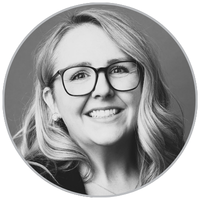

Kelly Kleinwachter, Marshall, Gerstein & Borun (United States)

Can you tell us a little about your career in trademark administration and how you first became involved with INTA and TMAP?
Kelly Kleinwachter (KK): I was very lucky to start with a solo attorney who was a former U.S. Patent and Trademark Office attorney examiner. In my early days as a trademark administrator, the work involved anything from taking one of her children to buy shoes, to filing an office action response, answering the phone, and sending faxes. It was really interesting and helped me understand how a law firm works, what’s involved, and the realities of a small office.

I got involved with INTA when TMAP was first in Chicago in 2007. Then, when I joined Marshall Gerstein, they told me to register for San Francisco and attend the Annual Meeting. From then on, I started attending the Annual Meeting and TMAP whenever I could, and it has been really rewarding.

When I was given the opportunity to co-chair the meeting, it felt full circle. I had a little moment of, “Did they mean to send this to me?” We all sometimes suffer from imposter syndrome, but I’m really looking forward to giving back to the community and creating resources. If one person can leave the meeting feeling more confident, or with a tip or trick they learned from the sessions we’ve put together, then we’re doing our job.

Justin Pierce (JP): I started at Venable, where I still work, and spent several years in IP practices focused on IP litigation in the patent area, but also on brands, designs, and trademarks. That is where I began getting into trademark practice on the legal side as outside counsel. After about five years, I went in-house and worked at Sony Ericsson in various roles around the world. One of the longest positions I held was senior in-house IP counsel responsible for trademarks and brand protection. That gave me the perspective of what it is like to work at a major brand.

Justin Pierce, Venable (United States)

Whether I was at a law firm or in-house, I interacted with INTA very early in my career. It began with attending some of the events. INTA has world-class educational material, and that was always a great resource. Beyond that, one of the great things INTA does is bring professionals together at every level and from every geography. As I moved up in the in-house world and we were looking for resources, people, and even candidates to recruit, INTA was a very good meeting ground for some of the best professionals in the field.

What does it mean to you personally to serve as co-chair of the 2026 TMAP Meeting?
JP: It means a lot to me, particularly as an attorney. In the United States, IP attorneys sometimes work only with other attorneys, and sometimes they have the benefit of working with a trademark paralegal or trademark administrator.

That role is invaluable, whether you are at a small firm or a large Fortune 500 company. Trademark administrators are a force multiplier. Many attorneys know that, but there are still others who do not. So, I feel privileged to have the chance to co-chair this meeting because it gives me an opportunity to help evangelize the role and the professionalism involved in the trademark administrator position.

KK: For me, it is about being able to give back to an organization that has provided me with so much support—a network, colleagues, and resources in every country. To be able to give back to that community and help shape a curriculum that we know will be useful—and that trademark administrators have asked for—is very meaningful.


Trademark administrators are a force multiplier. Many attorneys know that, but there are still others who do not. — Justin Pierce

You have both attended TMAP Meetings in the past. What has the experience meant to you professionally, and is there a particular session or moment that has stayed with you?
KK: I do not know if it is any one moment so much as the overall experience. It is so different from the Leadership Meeting and from the Annual Meeting. It is smaller. You are sitting at a table with people who face the same obstacles and challenges that you do. Over a cup of coffee, lunch, or maybe a glass of wine after sessions, you can say, “How are you handling this issue or this delay in documents?” You are engaging with people who have the same challenges. That is my biggest takeaway: those conversations and the real-world exchanges.

JP: I would say something similar. There is no one single moment. The ability to meet a wide group of people in trademark administrator and paralegal roles from across the country and around the world gives you a great chance to network and benchmark. Those discussions Kelly mentioned—how you are handling issues behind the scenes, for example, collecting documents, gathering evidence, meeting impossible timelines—create a sense of knowledge-sharing and camaraderie around that pressure. It is great for practical learning that you do not often get in a classroom setting.

How does TMAP differ from the Annual Meeting?
KK:  I think it is a good first step for trademark administrators, young practitioners, or even attorneys who have never attended a large IP event. It is a bit like an Annual Meeting “light.” It also makes networking feel more natural. Instead of trying to meet as many people as possible, you are building deeper, more lasting connections with peers you will continue to learn from after the Meeting. That combination of learning and connection is what sets TMAP apart.

JP: I agree. It is more intimate.

What are you most looking forward to in this year’s program?
JP: There are a few things. The schedule is action-packed with great topics, and one does not necessarily stand out ahead of the others because there are so many different challenges IP professionals are facing right now. This is the kind of event where you are going to get a range of those issues, but also practical input on how different entities—firms, companies, smaller practitioners, larger organizations—are dealing with them.

I would add that AI is obviously a topic behind everything at the moment. I think there will be a lot of discussion of that as it relates to different areas of law, different geographies, and different aspects of brand-related IP rights, whether you are talking about trademarks, domains, or designs.

KK: Like Justin said, it is hard to pick a favorite at this point. We are trying to do things a little more interactively, and I think people are going to notice some of the changes we have made because we have been intentional about shaping this Meeting based on feedback from past TMAP Meetings. The topics and sessions are what people have told us they value most, so registrants will be able to take things back home or to their office and put them to use right away. I am excited to see people recognize the changes we have made. They asked, and we heard them.

The TMAP Meeting is described as offering expertly curated educational sessions, Lunch and Learn Circles, Business Development excursions, and meaningful connections. Which of these elements do you think will resonate most with this year’s registrants, and why?
JP:  I’m particularly excited about the Lunch and Learns. It will be a much less formal, “let’s have a panel and speak directly to you,” atmosphere or vibe. These are, again, more intimate, more interactive, and designed to bring participants into closer proximity. They give you a chance for some flexibility and the ability to select what you might want to engage in.

KK: This year, I expect sessions focused on emerging topics like AI and its impact on the trademark administrator’s role to stand out. There is strong interest in understanding how these tools fit into day-to-day workflows and how they can be used in a thoughtful and responsible way.

At the same time, the Meeting’s smaller setting and interactive formats, including Lunch and Learn Circles, give attendees the opportunity to discuss those topics with peers, compare approaches, and learn from each other’s experiences. I think the combination of forward-looking topics and peer-driven discussions is going to really resonate with registrants, and I’m looking forward to it.


Instead of trying to meet as many people as possible, you are building deeper, more lasting connections with peers you will continue to learn from after the Meeting. — Kelly Kleinwachter

TMAP returns to the United States this year, in Baltimore. How does that shape the experience?
JP: First of all, Baltimore is a great city, and it is great to have TMAP back in the United States and in Baltimore for a few reasons. It is a very historic city, and the Inner Harbor is in a great location, with an excellent combination of history, culture, and a waterfront setting. For people who have not been there before, I think they will be pleasantly surprised and will enjoy the meeting venue and the surrounding area. I am a bit biased toward Baltimore as well, as my law firm started there and grew from there.

KK: This will be my first time in Baltimore, so there are a few things I am looking forward to doing, including visiting the aquarium. I have also heard there are some bakeries I need to try! I’ve been doing a lot of research and plan to come early just to enjoy at least a day of the city.

I also think the location is going to make the meeting a little bit more accessible for a larger part of the community. It is a little more doable for some of the U.S. administrators, especially those who do not necessarily have the same travel or business development budget.

What advice would you give to someone attending TMAP for the first time?
JP: I would recommend active participation. Do not just attend and sit down. The content will be great, and there will be great people to listen to and learn from, but you will get the most out of it by being an active participant. Share your ideas. Meet the people who are there. Exchange ideas. This is one of those rare events where you can hear from people actively dealing with cutting-edge issues, the hard stuff, the mundane stuff, and the emergencies that keep global trademark work moving behind the scenes. If you are not actively participating, you miss the chance to hear about the problems people are trying to solve and the tools they are using to do so.

KK: Exactly what Justin said: put yourself out there. I will be the first to admit that I did not! At the first TMAP I attended in my home city, I walked into lunch, did not know anybody, and probably went off and had a sandwich by myself. Do not do that! Sit down with someone and introduce yourself. They are probably feeling the same way you are, and you may make a connection that lasts throughout your career.

Learn more and register for TMAP 2026.

Although every effort has been made to verify the accuracy of this article, readers are urged to check independently on matters of specific concern or interest. The opinions expressed in this interview are those of the persons being interviewed and do not purport to reflect the views of INTA or its members.

© 2026 International Trademark Association


Topics
Privacy Overview

This website uses cookies so that we can provide you with the best user experience possible. Cookie information is stored in your browser and performs functions such as recognising you when you return to our website and helping our team to understand which sections of the website you find most interesting and useful.